
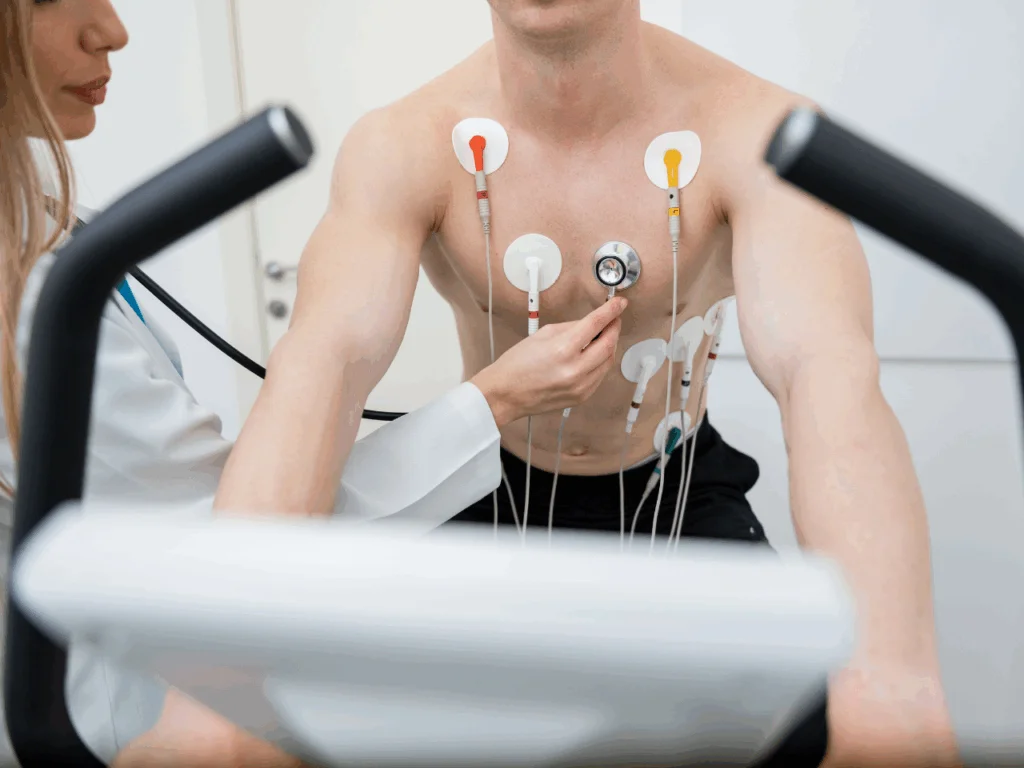
Computerised Treadmill Testing (TMT) is a non-invasive diagnostic test that evaluates the heart’s response to physical exercise under controlled conditions. During the test, the patient walks on a treadmill with gradually increasing speed and incline while continuous ECG, blood pressure, and heart rate monitoring is performed.
The test helps assess how well the heart copes with exertion and can uncover abnormalities that may not be visible at rest.
TMT plays a crucial role in the detection of coronary artery disease (CAD) by identifying exercise-induced ischemia, arrhythmias, and abnormal blood pressure responses. It is also valuable for risk stratification, treatment planning, and assessing exercise tolerance.
Doctors often recommend TMT for patients with chest pain, shortness of breath, or high cardiac risk factors such as diabetes, hypertension, smoking, or family history of heart disease. It is also commonly used in pre-employment or fitness evaluations where cardiovascular health is critical.
Detects exercise-induced angina and silent ischemia.
Evaluates arrhythmias and abnormal heart rhythms during exertion.
Assesses functional capacity and exercise tolerance.
Helps in risk stratification of patients with suspected or known CAD.
Monitors treatment effectiveness and post-intervention recovery.
Useful in occupational and sports fitness assessments.
Non-invasive, safe, and provides results in real time.

“Committed to exceptional healthcare and compassionate care for every patient, at every step.”
Maps
Copyright ©2025 All rights reserved | Designed by Rebecca Digital