
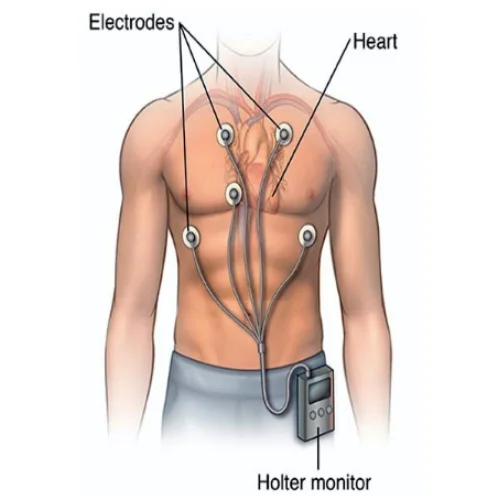
Holter monitoring is a non-invasive cardiac test that continuously records the heart’s electrical activity for an extended period, usually 24 to 48 hours or longer. Unlike a standard ECG that captures heart rhythm for only a few minutes, a Holter monitor provides detailed information about the heart’s activity during daily routines. It helps detect irregular heart rhythms, unexplained symptoms, and hidden cardiac abnormalities.
Holter monitoring plays an important role in diagnosing heart rhythm problems that may not appear during a regular ECG examination. It helps cardiologists evaluate episodes of palpitations, dizziness, fainting, chest discomfort, and irregular heartbeat patterns. Early detection through continuous monitoring allows timely treatment decisions and helps reduce the risk of serious cardiovascular complications.
Dr. Snehil Mishra, Cardiologist, provides expert evaluation and advanced cardiac monitoring solutions, including Holter monitoring, to accurately diagnose heart rhythm issues and support effective heart care.

“Committed to exceptional healthcare and compassionate care for every patient, at every step.”
Maps
Copyright ©2025 All rights reserved | Designed by Rebecca Digital