
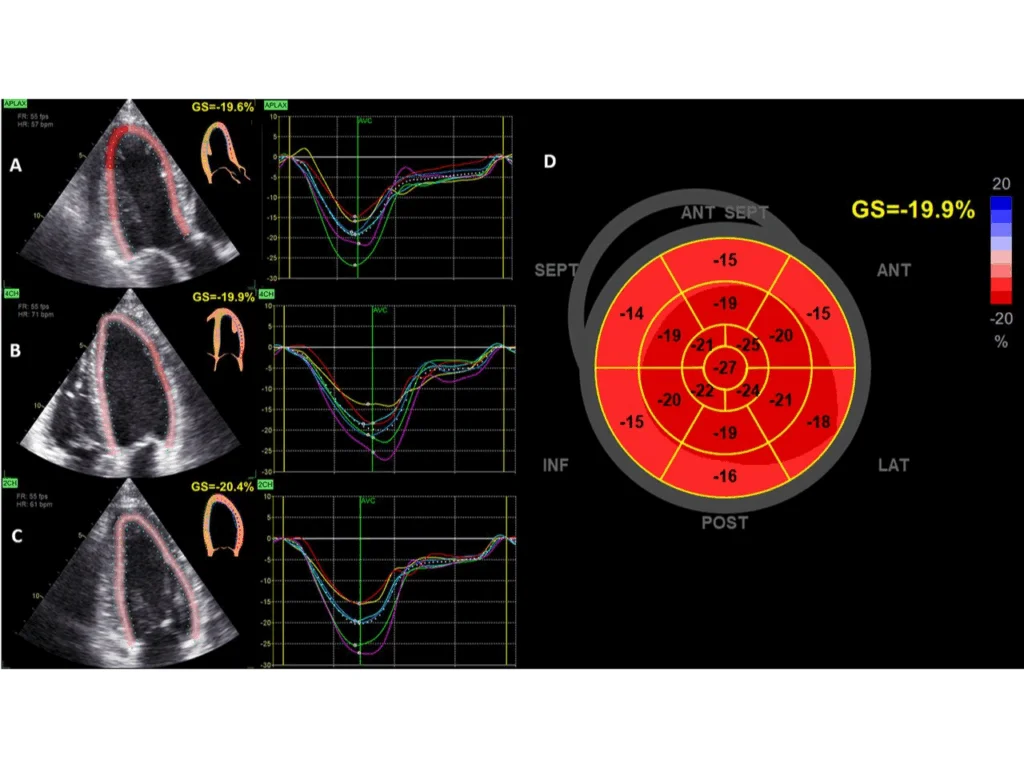
LV Global Longitudinal Strain (GLS) is an advanced echocardiographic technique used to assess the function of the left ventricle. It measures the deformation, or “strain,” of the heart muscle fibers along their longitudinal axis during contraction. This provides a highly sensitive and quantitative measure of left ventricular systolic function, often detecting dysfunction earlier than conventional ejection fraction (EF) measurements.
GLS offers early and precise insight into left ventricular performance, especially in conditions where ejection fraction may appear normal despite underlying dysfunction. By quantifying myocardial deformation, GLS helps clinicians identify subclinical disease at an early stage, enabling timely interventions.
This test is particularly valuable in patients with hypertension, diabetes, ischemic heart disease, chemotherapy exposure, and valvular heart disease, where subtle abnormalities may not be visible with standard echocardiography. It also plays a vital role in monitoring therapy response, guiding treatment strategies, and predicting outcomes in both outpatient and hospital settings.
Detects subclinical left ventricular dysfunction earlier than EF.
Useful in cardio-oncology to monitor chemotherapy-induced cardiotoxicity.
Provides better prognostic value compared to ejection fraction alone.
Helps in risk stratification for patients with cardiovascular diseases.
Tracks treatment response in chronic cardiac conditions.
Offers high reproducibility and sensitivity for subtle myocardial changes.
Plays a role in heart failure assessment with both reduced and preserved EF.
Non-invasive, accurate, and easily integrated with modern echocardiography.

“Committed to exceptional healthcare and compassionate care for every patient, at every step.”
Maps
Copyright ©2025 All rights reserved | Designed by Rebecca Digital