
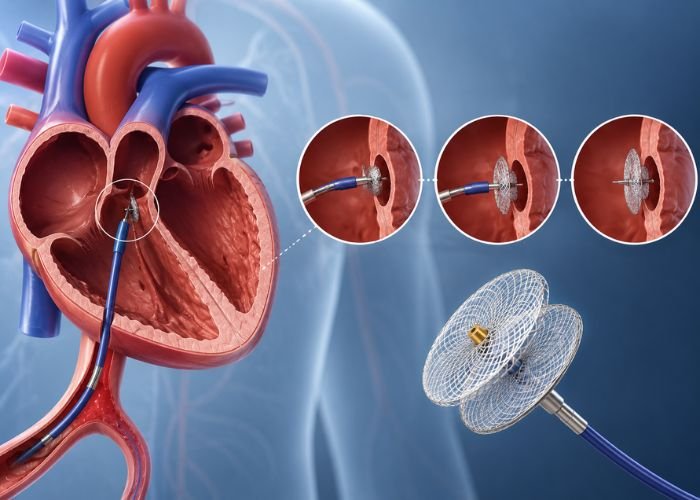
Percutaneous Device Closure is a minimally invasive cardiac procedure used to close abnormal openings or defects in the heart without the need for open-heart surgery. During the procedure, a thin catheter is inserted through a blood vessel, usually from the groin, and guided to the heart. A specially designed closure device is then placed across the defect to seal the opening and restore normal blood flow.
This procedure is commonly performed for congenital heart defects such as Atrial Septal Defect (ASD), Ventricular Septal Defect (VSD), and Patent Ductus Arteriosus (PDA).
Percutaneous Device Closure plays a vital role in treating structural heart defects that can lead to abnormal blood circulation, increased strain on the heart, lung complications, arrhythmias, and heart failure if left untreated.
The procedure offers a safer and less invasive alternative to traditional open-heart surgery, resulting in shorter hospital stays, faster recovery, and minimal scarring. It helps improve heart efficiency, reduces symptoms such as breathlessness and fatigue, and prevents long-term cardiac complications.
It is especially recommended for patients with suitable congenital heart defects who are eligible for catheter-based closure procedures.
Minimally invasive alternative to open-heart surgery.
Effectively closes abnormal openings in the heart.
Improves normal blood circulation and heart function.
Reduces symptoms like breathlessness, fatigue, and recurrent infections.
Shorter hospital stay and faster recovery time.
Minimal pain and smaller scars compared to surgery.
Lower risk of complications and infection.
Helps prevent long-term heart and lung damage.
Suitable for ASD, VSD, PDA, and selected structural heart defects.
Provides safe and effective long-term results.

“Committed to exceptional healthcare and compassionate care for every patient, at every step.”
Maps
Copyright ©2025 All rights reserved | Designed by Rebecca Digital