
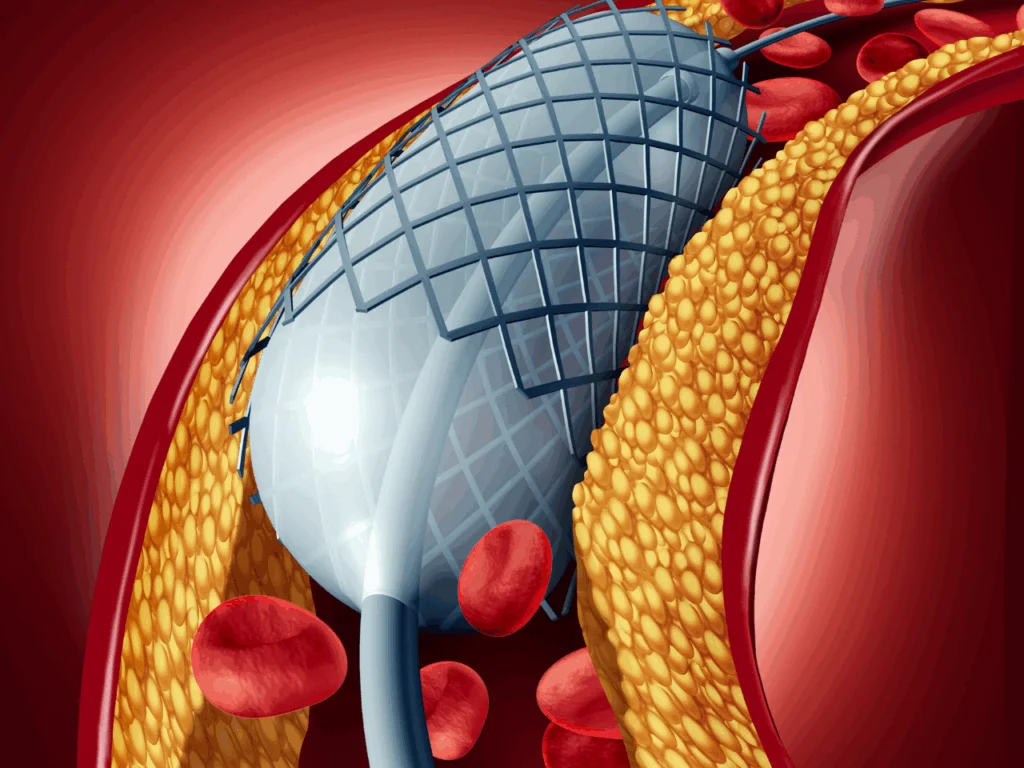
Renal Angioplasty & Stenting is a minimally invasive procedure used to open narrowed or blocked renal arteries, the vessels that supply blood to the kidneys. Using a catheter inserted through a small puncture in the groin, a balloon is guided to the narrowed section of the renal artery and inflated to widen it. In most cases, a stent (a small mesh tube) is then placed to keep the artery open and ensure long-term blood flow.
Renal artery narrowing (renal artery stenosis) can lead to uncontrolled high blood pressure, reduced kidney function, or even kidney failure. Renal Angioplasty & Stenting helps restore adequate blood supply to the kidneys, allowing them to function properly.
This procedure is especially beneficial in patients with:
Resistant hypertension (blood pressure uncontrolled despite medications)
Ischemic nephropathy (kidney dysfunction due to poor blood flow)
Progressive kidney disease caused by arterial blockages
By improving blood flow, the procedure often results in better blood pressure control, stabilization of kidney function, and prevention of further damage.
Restores normal blood flow to the kidneys.
Helps in controlling resistant or severe hypertension.
Prevents further deterioration of kidney function.
Reduces risk of chronic kidney disease progression.
Offers a minimally invasive alternative to open surgery.
Provides long-term vessel patency with stent placement.
Improves overall cardiovascular and renal outcomes.
Safe, effective, and allows quick recovery compared to surgery.

“Committed to exceptional healthcare and compassionate care for every patient, at every step.”
Maps
Copyright ©2025 All rights reserved | Designed by Rebecca Digital