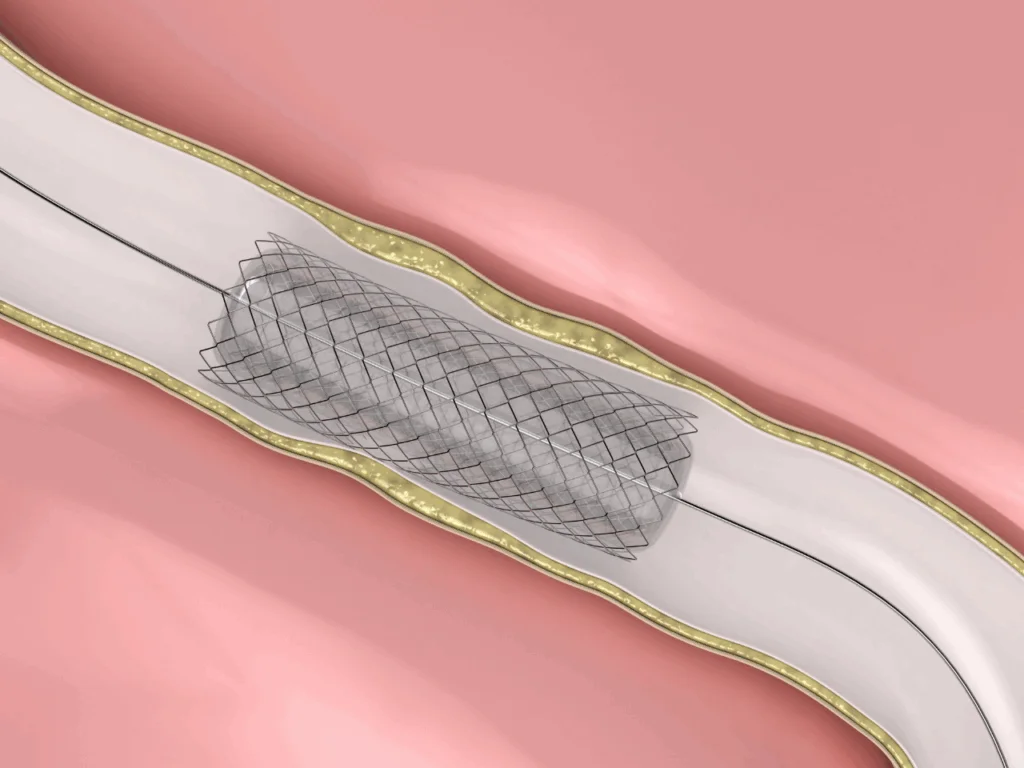
Coronary Angioplasty, also called Percutaneous Coronary Intervention (PCI), is a minimally invasive procedure used to open blocked or narrowed coronary arteries. A thin catheter with a balloon at its tip is guided to the site of the blockage. The balloon is then inflated to widen the artery, and in most cases, a stent (tiny metal mesh tube) is placed to keep the artery open and ensure long-term blood flow.
Coronary Angioplasty is one of the most effective treatments for coronary artery disease (CAD). By restoring blood flow to the heart muscle, it relieves chest pain (angina), improves exercise tolerance, and reduces the risk of heart attack.
In emergency settings—such as during an acute myocardial infarction—angioplasty is life-saving, as it quickly re-establishes blood supply and minimizes heart muscle damage. It is often chosen over bypass surgery for patients with fewer or simpler blockages, offering faster recovery and lower risk.
Restores blood flow to the heart muscle immediately.
Provides rapid relief from angina and breathlessness.
Reduces the risk of heart attack and further cardiac events.
Minimally invasive with quicker recovery than bypass surgery.
Often performed with stent placement for long-term effectiveness.
Improves quality of life and physical activity tolerance.
Life-saving in acute heart attack (primary PCI) situations.
Safe, effective, and widely available in modern cardiac centers.

“Committed to exceptional healthcare and compassionate care for every patient, at every step.”
Maps
Copyright ©2025 All rights reserved | Designed by Rebecca Digital